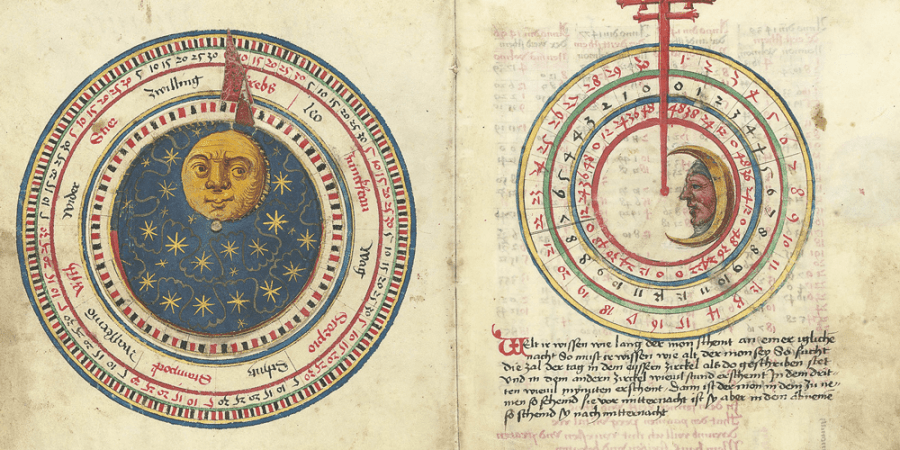
Anno Lucis
As we have just begun a new year, it seems appropriate to call attention to a special system of dating, used by Masons for hundreds of years. If one spends enough time seeking further light in Masonry, they invariably see articles, procedures, and certainly cornerstones, which refer to “Anno Lucis” or “A.L.” What does it mean? Where does it come from? To understand it, let us start with some basics:
B.C. – “Before Christ,” previously, “a.C.n.,” or “Ante Christum Natum,” meaning before the birth of Christ.” There is no consensus as to when the shift to B.C. occurred. Other, non-secular versions are also used, such as B.C.E. and C.E., which are translated “Before the Common Era,” “Common Era,” or “Current Era.” Regardless of phrasing, all of these notations refer to the same era and the Gregorian and Julian calendars.
AD (anno Domini) – Medieval Latin, meaning “In the Year of the Lord.” This was abbreviated at some point from the original “anno Domini nostri Jesu Christi.” The term Vulgaris Aerae, or “Vulgar Era” is also used to describe the same period after the supposed birth of Christ. This calendar began with year 1, in the transition from the use of B.C. to A.D., there was no year 0.
AM – (anno Mundi) – Medieval Latin, meaning “in the year of the world.” This calendar system is based, primarily, upon accounts (Old Testament) of the creation of the world and the events which followed. It is still used within Jewish communities for religious and other purposes. This era is calculated to have begun on October 7, 3761 B.C. when translated into the Gregorian calendar. At sunset, on September 9, this calendar began year 5779.
AL (anno Lucis) – Medieval Latin, meaning “in the Year of Light.” This calendar system, invented in the 1700s, was intended to be a simplification of the anno Mundi system. The system adds 4,000 years to dates in the Gregorian calendar, making the year 2019, 6019.
Okay, now that we have covered that…
Anno Mundi was created in 1658, by Irish Anglican Bishop James Ussher, who believed he had calculated the exact date of God’s creation of the world. He derived this date by correlating biblical accounts with those in Hebrew genealogy, Middle Eastern history, and other events. His theory advanced Sunday, October 23, 4004 B.C. (in the Gregorian calendar) as the date the world was created. The theory became widely accepted and, by 1701, new editions of the King James Bible were being produced, proudly proclaiming that, while not part of scripture, this was the date true Christians should accept.
It should be no surprise, then, that when the United Grand Lodge of England was formed, just sixteen years after Anno Mundi began to be referenced in Bibles, that Masons began using it to date documents using 4004 B.C. as the first year. However, even in 1717, brethren elected to create a short form and modified the Mundi system to correspond to the Gregorian calendar, making 1717, 5717, and thus Anno Lucis was born.
 Thoughts on Life and Freemasonry